







- News Categories
- General News
- SHDC runs waste trucks on vegetable oil to reduce carbon emissions
SHDC runs waste trucks on vegetable oil to reduce carbon emissions
FeaturedNew
South Hams District Council is taking practical steps to cut carbon emissions from its vehicles and buildings, as part of its work to create a cleaner and greener South Hams.
A trial using Hydrotreated Vegetable Oil (known as HVO) instead of diesel, in four of its waste and recycling vehicles saw reductions in carbon emissions of between 79% and 89%. The trial "found no compatibility or reliability issues, and the vehicles did not need to be modified to use the alternative fuel".
HVO also improved fuel efficiency in the larger collection vehicles that carry out frequent stop-start journeys, making it particularly suitable as a short to medium-term option for parts of the council’s waste and recycling fleet where electric alternatives are not yet practical.
Electrification remains the council’s long-term priority for smaller vans and light commercial vehicles, and 15 diesel vans have already been replaced with fully electric vans.
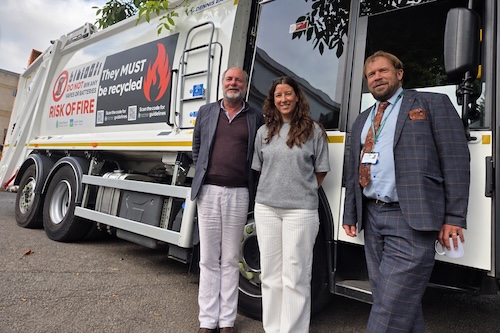 Cllr Julian Brazil, Executive Lead Member for Waste, Cllr Nadine Dommett, Executive Lead for Decarbonisation of Council Operations, and Cllr Dan Thomas, Leader of South Hams District Council, with one of the new vehicles
If HVO were introduced across the full waste fleet, it is estimated that it could reduce annual emissions by around 1,210 tonnes of carbon dioxide equivalent. This would represent an 81% reduction in emissions from the waste and recycling fleet and a 61% reduction in the council’s overall direct and indirect emissions, based on 2025/26 fuel use.
The council is now considering expanding and extending the trial at its Ivybridge and Torr Quary depots for a further six months. This would allow it to continue assessing fuel costs, operational performance and sustainability before deciding on any wider introduction.
The work follows significant investment in renewable energy at council-owned buildings.
At Quayside Leisure Centre in Kingsbridge, 310 solar panels have been installed as part of the council’s wider decarbonisation programme. They are expected to generate around 186 megawatt hours of clean electricity each year, providing around half of the centre’s annual electricity use and saving approximately 36.1 tonnes of carbon emissions each year.
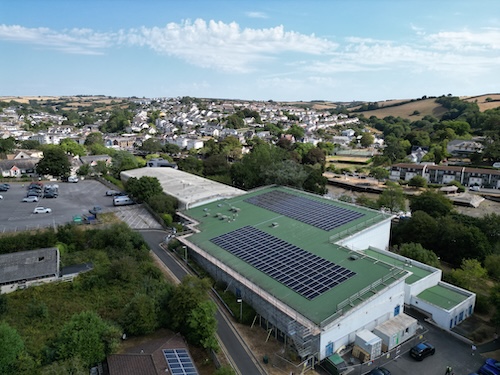 The roof of Quayside Leisure Centre, which now has solar panels on it as part of SHDC's strategy to lower emissions
The council has also committed to installing solar panels at its leisure centres in Ivybridge, Dartmouth and Totnes. Together, the planned installations at these three sites are expected to save around 90 tonnes of carbon emissions each year, while helping to reduce energy costs and support the centres’ long-term financial sustainability.
These projects form part of a wider programme to reduce the council’s environmental impact. This included solar panels and additional insulation at Follaton House, the introduction of electric vehicles and charging points, and planned improvements such as lower-energy LED lighting in council car parks.
Cllr Nadine Dommett, South Hams District Council’s Executive Lead for Decarbonisation of Council Operations, said: “The council is turning its climate ambitions into practical action across the services and buildings it operates.
“The results of the HVO trial are extremely encouraging. They show that we can make a significant and immediate reduction in emissions from our larger collection vehicles while we continue working towards longer-term, zero-emission alternatives.
“At the same time, our investment in solar energy is helping our leisure centres generate their own clean electricity, reduce their running costs and become more sustainable for the future.
“There is no single solution to reducing our carbon footprint. It requires a range of carefully considered steps, from renewable energy and more efficient buildings to cleaner vehicles and better use of fuel. Together, these projects show the positive progress we are making towards a cleaner, greener and more resilient South Hams.”
While the council "recognises that HVO is not a permanent replacement for zero-emission technology", the fuel could "provide an important transition for our larger vehicles where suitable electric alternatives are not yet viable".
Any future procurement would require recognised sustainability certification and checks on the fuel’s source. The council would also continue to review emerging evidence, regulation and new technology to make sure that its approach remains responsible, transparent and effective.

User comments
You might also be interested in


-
{{#owner}}
-
{{#url}}
{{#avatarSrc}}
{{name}} {{/url}} {{^url}} {{#avatar}} {{& avatar}} {{/avatar}} {{name}} {{/url}} - {{/owner}} {{#created}}
- {{created}} {{/created}}